
American Reform – The World Revolution and the Jews — Rosa, 1922

“In short, from the sum of these details, one fact emerges clearly and manifestly: this [Jewish] race, which until yesterday lay in the dead ends, in the lowest depths of Russian life, has suddenly shaken itself and seized the throne: yesterday it was nothing; today it is everything and everywhere, and according to the instinct of fallen races, it hastens to vent the rage of its triumph, fearing that it will not last long.”>

Setting the Stage

Recently, in describing the history of the Left in America, the prominent author and journalist Batya Ungar-Sargon declared, “Jews built the left in this country. We built the labor movement. We brokered the New Deal. Ninety percent of the lawyers who worked on civil rights cases were Jews. We’ve been at the forefront of every liberal and leftist issue in this country [emphasis added].1 A stunning admission, perhaps even a confession, but for the fact that she was proud of this well-documented radicalism. In other words, she was bragging, reminding the audience of the leftist bonafides of the Jewish community, drawing upon their participation and leading role in the sexual, social, religious and racial revolutions of twentieth-century America.>Dennis Prager, another prominent figure who could not be credibly accused of antisemitism, made the same observation, only from the perspective of a Jewish conservative. In his interview with the Jewish Learning Institute a few years ago, he lamented, “Every ‘ism’ except except Nazism was founded and/or led disproportionately by Jews. You name it, Marxism, humanism, socialism, environmentalism, feminism, Jews. It’s the Jews. Jews are huge advocates of everything except Judaism. Jews are huge advocates of everything except ethical monotheism (emphasis added).”2


Originally published in The Journal of American Reform. Read original article
American Reform – A Critical Reevaluation of Mit brennender Sorge — Pt. 1

“This Note [from Cardinal Pacelli] … accuses the German government of having misunderstood the intention of the encyclical. It is inaccurate, it is written, that Mit brennender Sorge is a hostile document, when it is simply intended to be medicinal. And incidentally, the Note twice awards, in this very first paragraph, an undeniable pat on the back to the government of the Reich. ”>

V.H.O. (Free Historical Research) A.s.b.l. European Foundation for Free Historical Inquiry, 1999

Prefatory Remarks

For the last eight decades, endlessly, we have been told or heard it implied that to be a good Catholic, one must be “anti-Nazi”. Passed down to the masses, the Catholic intelligentsia and various officials maintain that in 1937 Mit brennender Sorge “condemned the Third Reich and National Socialism,” and that it was issued for that—and only for that. >The usual characterization goes something like this:


Originally published in The Journal of American Reform. Read original article
American Reform – Should Women go to University? — Williamson, 2001

“Since modern man does not want her to do what God meant her to do, namely to have children, she takes her revenge by invading all kinds of things that man is meant to do. What else was to be expected? Modern man has only himself to blame. In fact, only in modern times have women dreamt of going to university, but the idea has now become so normal that even Catholics, whose Faith guards Nature, may have difficulty in seeing the problem.”>

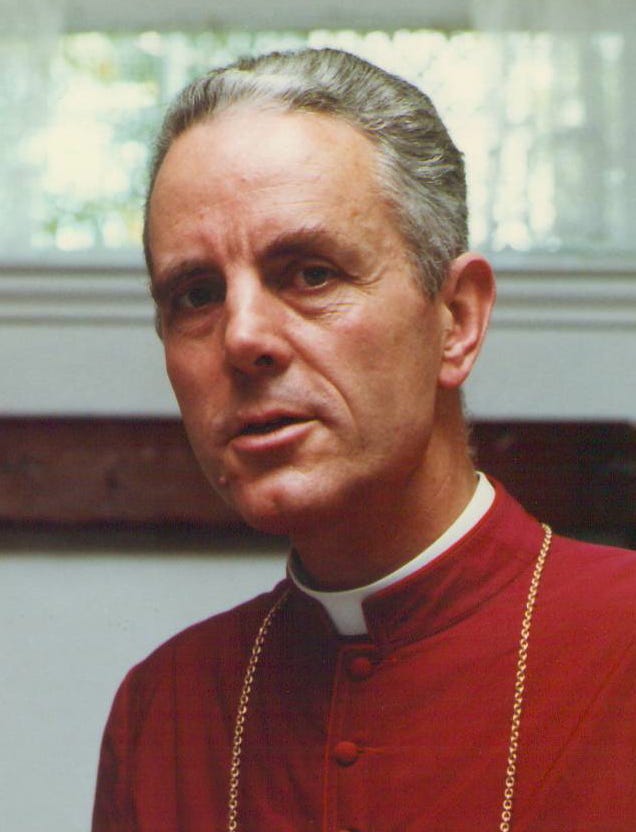
Richard Williamson (bishop) - Wikipedia

Portrait of His Excellency, Richard Nelson Williamson (1940-2025)

State of the Question

Dear readers, yet again, we must challenge a modern (read false) dogma, one championed by every kind of feminist, whether of the moderate or radical variety. It may well be a pillar of modern thought, an idea so accepted that for the vast majority of people, it would be unthinkable to question (hence its dogmatic status), much less reject. Sadly, most Catholics have fallen into this revolutionary trap. Of course, we are talking about women being encouraged and permitted to attend university, which is distinct from their receiving a proper, feminine education.>Women do not belong at university, which we Americans sometimes call “college”, often using the two interchangeably. This truth need not be followed by equivocation. It is not only inconsistent with the nature of women, but also the purpose of a university and invariably leads to distraction for the brightest men. Unconvinced? Writing about twenty-five years ago, the intrepid English Bishop, Richard Nelson Williamson, laid out the case drawing from the wells of St. Thomas, common sense and practical experience. We are pleased to republish this important writing from Bishop Williamson, whose wit was matched only by his intellect. Neologisms like “unibrothels”, “studentess” and “trashy unwomen” await the reader, surely to tease a chuckle, or at least a smile. One could never accuse him of failing to write and speak in a compelling way.


Originally published in The Journal of American Reform. Read original article
American Reform – The Great Pope Benedict XIV and the Jewish Question in Poland — Trzeciak, 1939

“He [Hitler] has models among the Great Popes (who fought Jewish anger), apart from those mentioned, in Nicholas IV, Paul IV, Clement VIII; he has models among the saints, he has a providential mission to tame Jewish anger and save humanity from Judeo-communism, introducing the church laws issued against the Jews in ancient centuries, but he must cease fighting the Church, because this fight will bring him ruin.”>

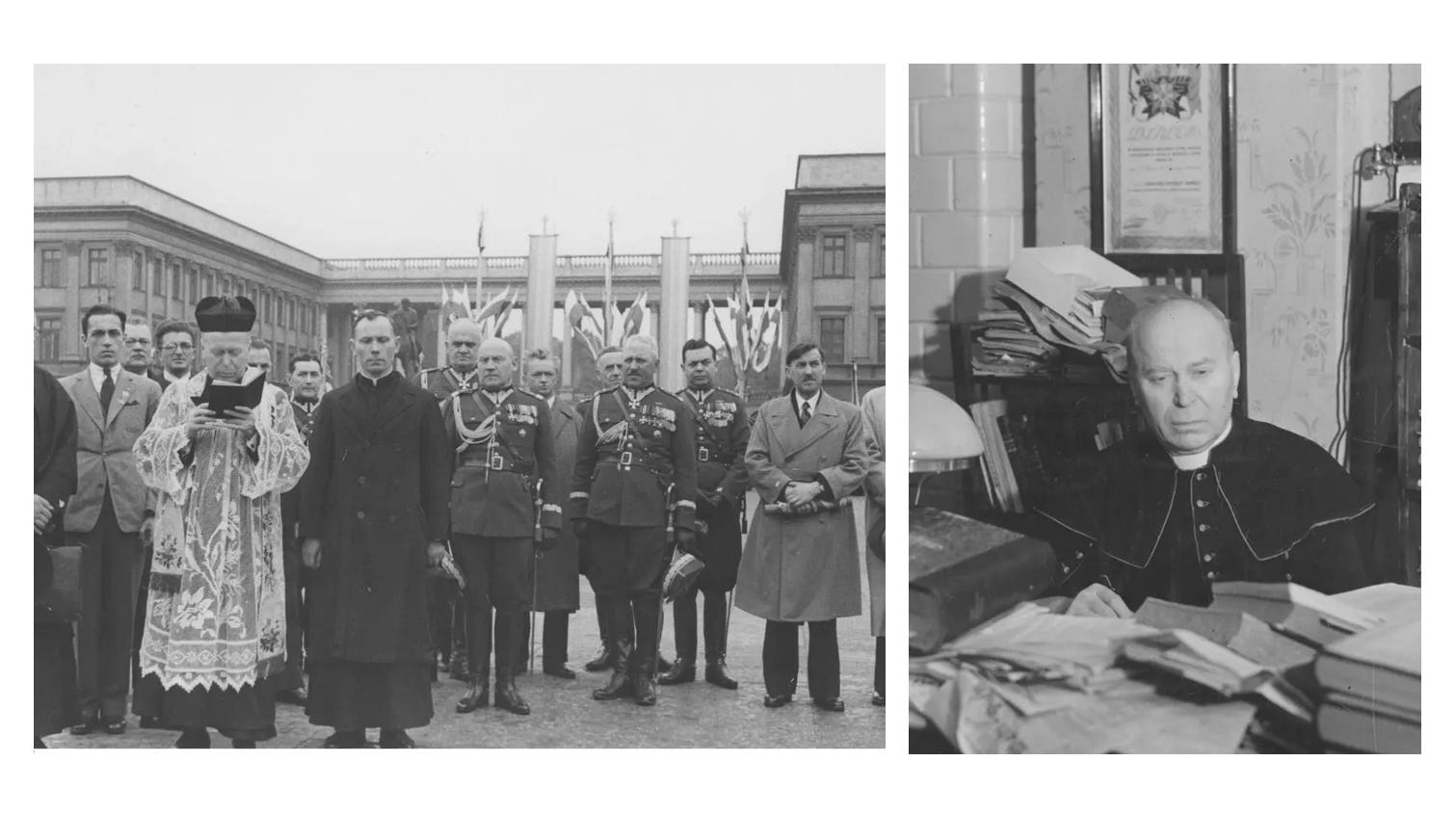
Picture collage of Rev. Dr. Stanisław Trzeciak, taken from the National Digital Archives

The Jewish Question

The “Jewish Question”, perhaps more than any time in recent history, is on the minds of men. Regrettably, the public discussion is being conducted in an imprecise way. Many aspects of the question are not being addressed, much less grasped—i.e. religious, racial, cultural, historical, psychological, etc.—nor is there an appreciation for the intrinsic opposition that exists between Catholicism, the only Christianity worthy of its name, and Judaism. While not surprising, this present lack of clarity offers us an opportunity to shed light on the issue, simultaneously surveying the Fathers, Popes, and approved Catholic authors who already have treated the same, perennial Jewish Question.>The related Jewish problem, aptly called a peril, is brought on by the Jews, themselves, and not Christians. It is through their incessant and deadly attacks on our religion, culture, race and heritage that prompt us to act defensively and out of justice, which the Jews decry as “antisemitism”. Thankfully, this cynical cry is losing its “bite”, and does not produce the chilling effect it once did. Save for Jews, no other group has this special privilege, a blanket immunity, which works to undermine any and all opposition to its aims, whether legitimate or not. As for our Catholic defense against the Jewish threat, we must include special legislation to limit Jewish influence, particularly in public life, and measures to distinguish them from the faithful. Badges and hats have historically proven to be effective, while a digital marker would work similarly today. These are the same faithful who, as Pope Alexander III (Ad haec, de Judaeis) reminds, do not realize “Jewish ways do not harmonize in any way with ours” and “could easily turn the minds of the simple to their own superstitions and faithlessness through continual intercourse and unceasing acquaintance.”


Originally published in The Journal of American Reform. Read original article
American Reform – What, Exactly, is the Governing Spirit of America? — Tardivel, 1900

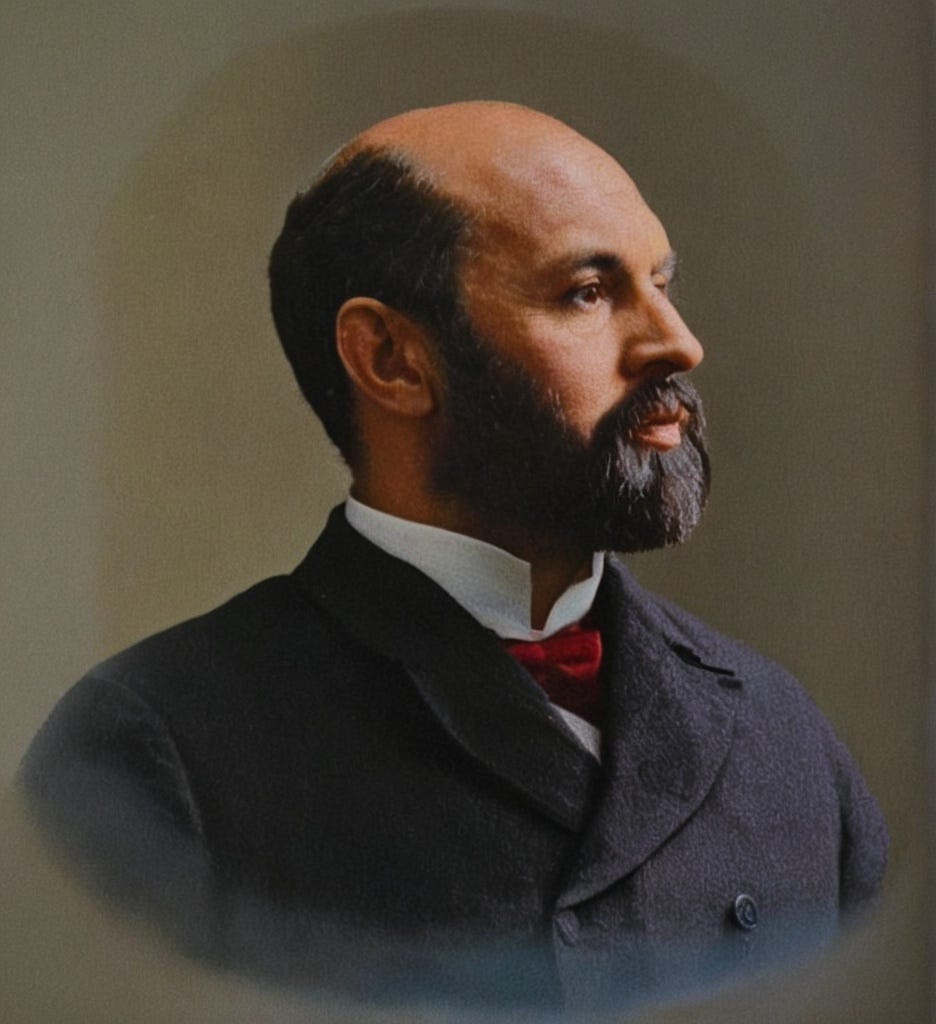
“The spirit of the American Revolution does not differ much, whatever may have been said, from the spirit of the French Revolution. In the Declaration of Independence of July 4, 1776, we find, it is true, the name of GOD, of the ‘GOD of nature’ and of the ‘Creator’; but it is only a question of the rights of man. There is no more mention of the rights of GOD and the duties of man than there is of them in the “immortal principles of ‘89.”>

Colorized portrait of Mr. Jules-Paul Tardivel

The American Situation

Our beloved country, America, is very sick. A disease has been spreading through her body, as far back as any man can remember. It spreads now with ever increasing intensity and scope. Godlessness, immorality and the cry of “rights, rights and more rights” dominate American life, culture and government. Political parties are mired in liberalism, corruption and tired ideas. Capitalism, emboldened and without restraints, has produced a money-obsessed, individualistic and debauched culture. Morality has taken the back seat to profit, and individual goods triumph, routinely, over the common good. We are told America was founded as a Christian nation, so how did we arrive here? >Realizing some of these problems, the solution most people give for our country is more freedom, strangely never bothering to define their term. Others, no less impassioned, insist on returning to a vision of America before the 1960s, that is “before things went crazy”, while those with an eye for history dare to suggest a restoration of the order before the Civil War.


Originally published in The Journal of American Reform. Read original article
American Reform – Contra Hall: Is Racialism Incompatible with Catholicism?

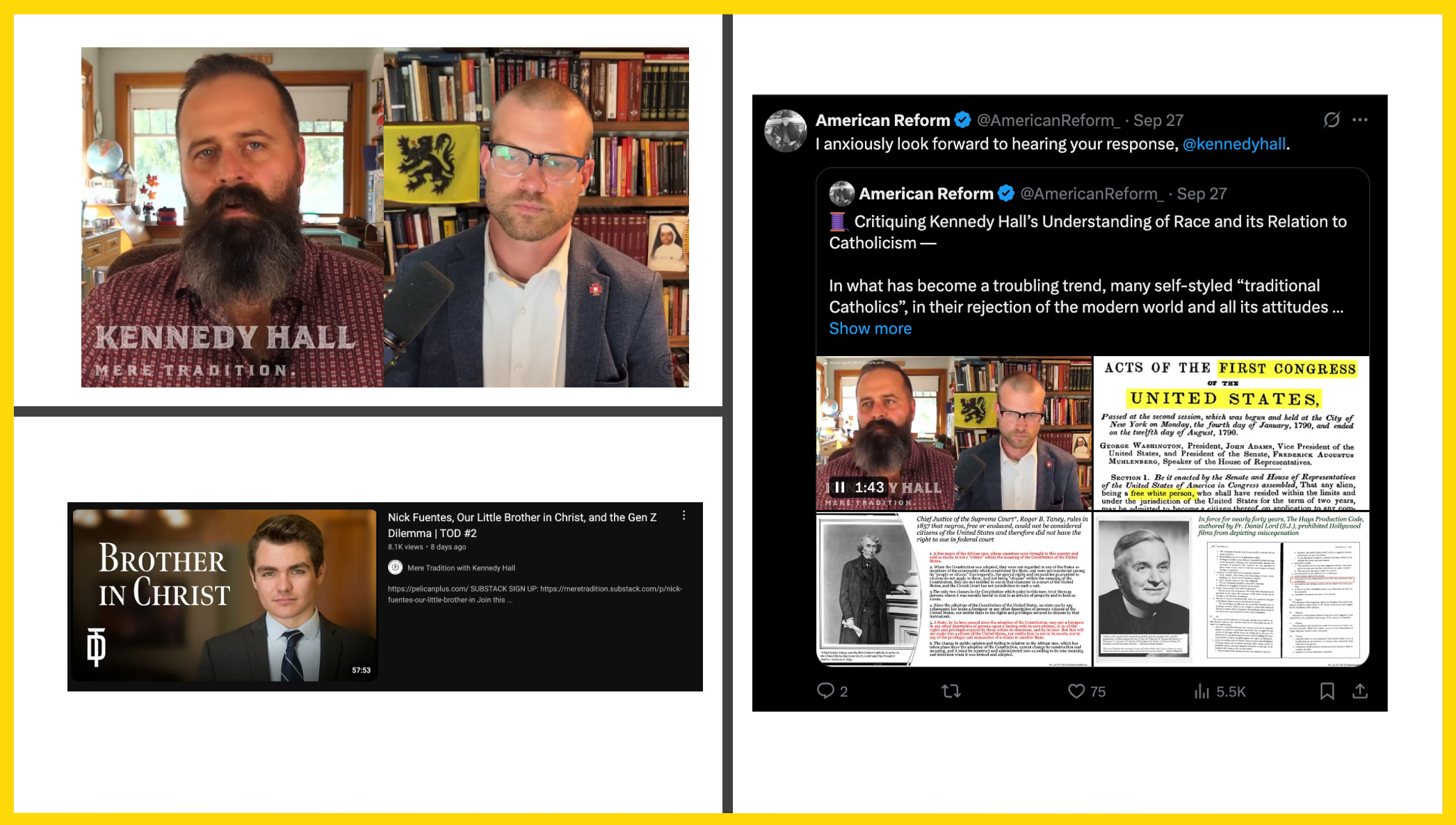
In a video entitled “Nick Fuentes, Our Little Brother in Christ, and the Gen Z Dilemma | TOD #2”, which premiered on YouTube on September 27, 2025, and Tim Flanders from , both of whom are notable figures in what could be termed the “traditional Catholic movement”, waded into the debate on questions of race, culture and American identity. Notwithstanding a somewhat patronizing video title, the viewer was introduced to arguments on the supposed opposition between racialism, that is racial preservation and an attendant racial program, with the Catholic faith. What is more, America was characterized as a country without a distinct racial character. Regrettably, Kennedy Hall, who will be the focus of this essay, did not offer any specific authors to support his arguments, much less Church-approved ones. >

Collage of the original video and thumbnail, appearing in the left two panels, with the original X response in the right panel

>

Conspicuous Silence

After the original video was released on the morning of September 27th, we spent considerable time preparing a response, the germ of which was developed into this essay. The hope was Hall would respond to good-faith criticism. The arguments marshaled were supported by approved authors, as alluded to above, so it was not a question of appealing to authorities that he would not find credible, or could easily dismiss.


Originally published in The Journal of American Reform. Read original article
American Reform – On Indifferentism and Liberalism, and the Opposite Doctrine of the Church — Garrigou-Lagrange, 1926

“Liberalism […] defends the civil liberty of every cult, as a condition of society not in itself disordered, but conforming to reason and the spirit of the Gospel, and as most useful. For although liberal Catholics admit that the Catholic Church was divinely instituted, they teach that full liberty must be granted to it, but that nothing more is owed to it.”>

>

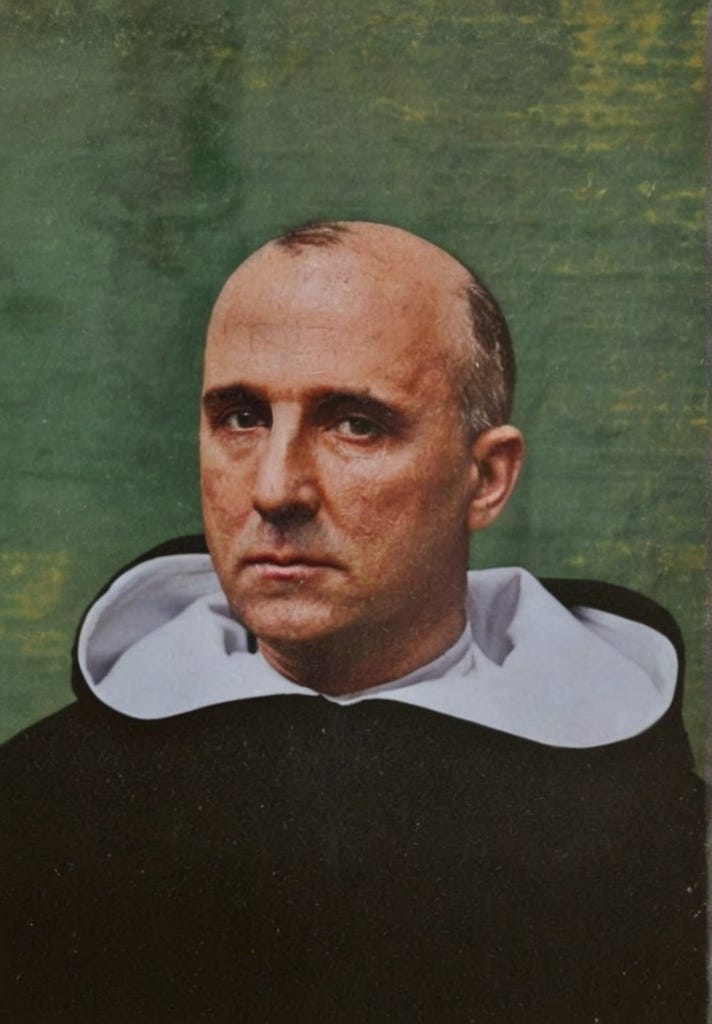
Colorized portrait of Fr. Reginald Garrigou-Lagrange, O.P.

Editors’ Introduction

For those interested in the great renewal of scholasticism, ushered in the with the pontificate of Pope Leo XIII in Aeterni Patris, few names are as recognizable in the 20th century as Fr. Reginald Garrigou-Lagrange. He was a French Dominican theologian and philosopher, who taught at the Pontifical University of St. Thomas for fifty years, instructing from the years 1909-1959. In an attempt to make his writing more known, particularly to an English speaking audience, we are publishing a translated section of his manual on Divine Revelation. The third edition, which can be viewed below, was published in Latin in 1926. As for theological and philosophical manuals more broadly, as modern Catholics ought to realize, they are the antidote, in many ways, to the present crisis in the Church.


Originally published in The Journal of American Reform. Read original article
American Reform – The Conclusion to the Foundations of National Socialism — Hudal, 1937

“If National Socialism is only a political-social problem, then there is no reason for Catholics, who cannot be surpassed by anyone in their love and loyalty to state and nation, not to also be faithful, unreserved adherents of this movement… however, [if] National Socialism is synonymous with a new Worldview raised to the level of a dogma, in which an overabundance of the false paths of past decades are assembled into a dazzling myth that is particularly fascinating to the youth, then silence and waiting would be an affirmation and a denial of the faith.”>

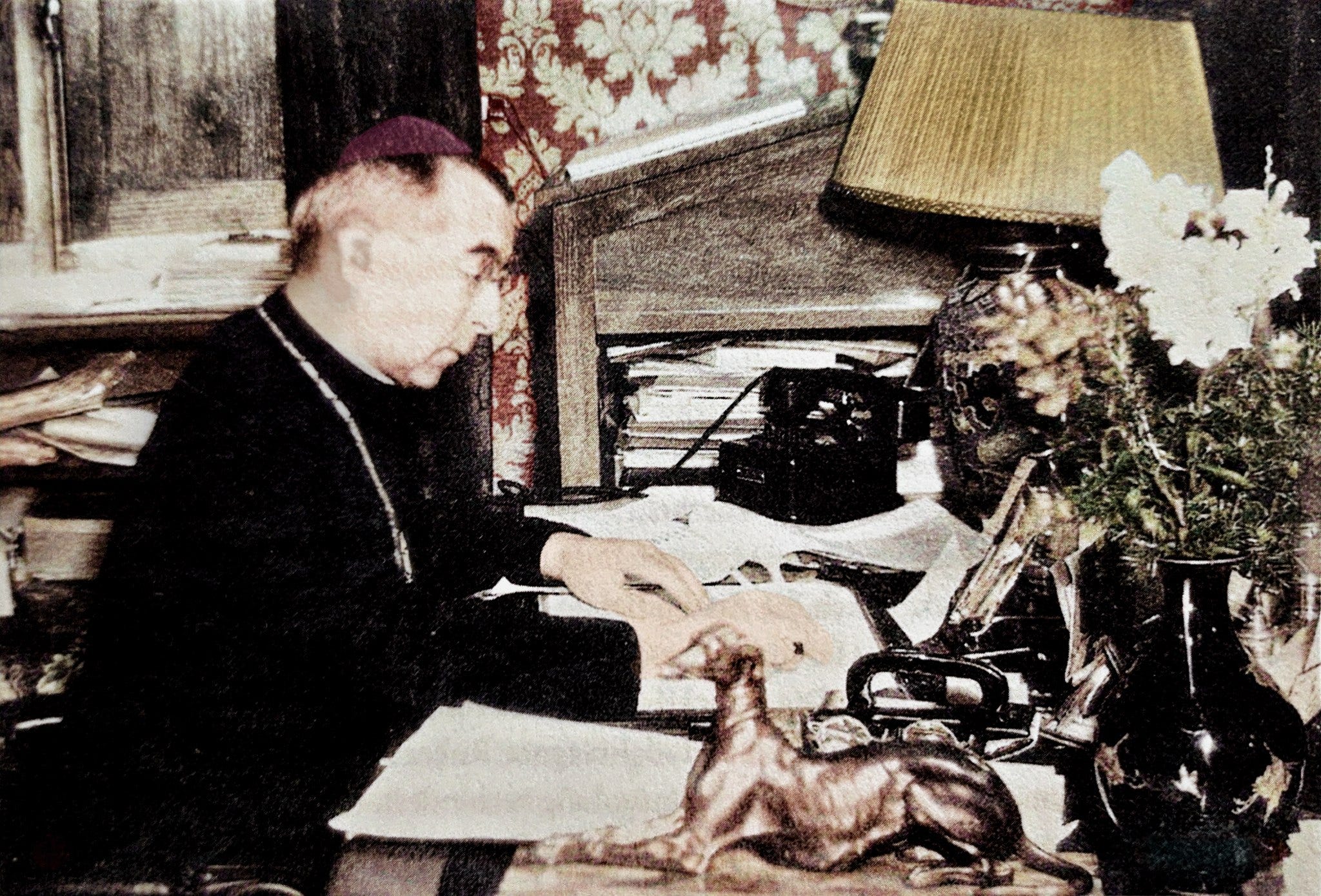
Even in times of war, a busy ‘networker’: Bp. Alois Hudal at his work desk in the Anima | Colorized photo courtesy @Hudalianlarp on X

Introduction

“National Socialism is not an accident, not the invention of individual men, by no means a radical upheaval, but rather something long prepared for in the German character and its development”, observed a high-ranking ecclesiastic in 1937. He immediately followed it by saying “[National Socialism] belongs in the riverbed of German history and is rooted in its past.”>These quotes, of course, are taken from the third and final installment of our series featuring the writing of Alois Karl Hudal, the aforementioned ecclesiastic. The concluding chapter, translated from the original German, will be presented below. It is a critical study that has been largely forgotten or, if by chance remembered, unfairly maligned. The English name of the work is “The Foundations of National Socialism, and it provides valuable insight into the situation of the German Reich and Catholic Church during the interwar period. Not only that, but it traces the intellectual history and major players of National Socialism and its program.


Originally published in The Journal of American Reform. Read original article
American Reform – Religious Liberty Dissected — Interview with Stephen Kokx

Summary

The intrepid Stephen Kokx, who runs the publication, invited me on his program, Church and State, to discuss the conciliar doctrine of religious liberty. An error that was officially taught at the Second Vatican Council and now, approaching the seventy year mark, has been subsequently interpreted, implemented and developed by conciliar authorities. >The springboard for this conversation was the preface I had written to a translated work from Fr. Hervé Belmont, which is invaluable in my estimation. Time permitting, readers are encouraged to read Fr. Belmont’s analysis, before listening to my discussion with Stephen. Find it below:>

American Reform – On True and False Notions of Equality — Duvoisin, 1829

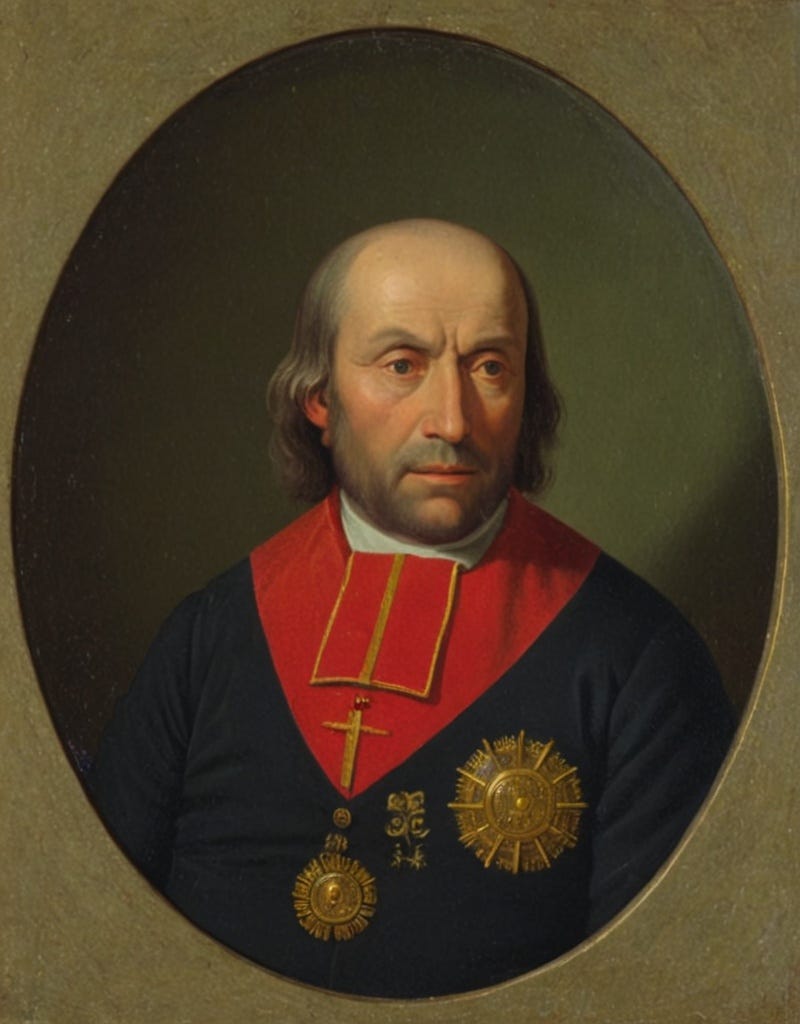
“For, if on the one hand, all men are equal, in the sense that they have the same nature, the same origin, the same end; on the other hand, they are extremely unequal in strength, in enlightenment, in virtue; and it is clear that the metaphysical equality that results from the identity of nature will soon disappear in the face of the real inequality that necessarily produces the difference in physical, intellectual, and moral qualities.”>

Portrait of Bp. Jean-Baptiste Duvoisin

Introduction

“We hold these truths to be self-evident, that all men are created equal…” reads the second paragraph of the Declaration of Independence, penned in 1776 by the revolutionary, liberal ideologue and prominent Founding Father, Thomas Jefferson. If you were to survey the American public today, likely, not one man in a hundred would be willing to challenge this foundational American dogma, that is the equality doctrine or egalitarianism. A sad situation, yes, but nonetheless true. >This concept of equality, in which no distinction is made between the abstract and concrete, between what is intrinsic to men and what is extrinsic, along with the effects of sin remains one of the primary engines of disorder in our beloved country. Unsurprisingly, the antidote to this equivocal usage of “equality” will be a 19th century French Catholic prelate, Bishop Jean-Baptiste Duvoisin. Bishop Duvoisin, whose biography will be seen below, had the following to say about the French Revolutionaries, who were also keen on egalitarianism:


Originally published in The Journal of American Reform. Read original article